Kort fortalt
- 28%more medicine prescriptions with higher conflict (per SD increase)
- 13%higher odds of hospitalisation with higher conflict
- 5 yrspre-divorce health data — conflict harms health before divorce too
Study at a glance
- Study type: Longitudinal observational study
- Country: Denmark
- Participants: 1,784 divorced Danes
- Time window: 5 years before to 5 years after legal divorce
- Data source: Danish national health registers
- Outcomes: Medicine prescriptions, primary care visits, hospitalisations
What was this study about?
How much does conflict during a divorce actually affect long-term health — and when does the damage begin?
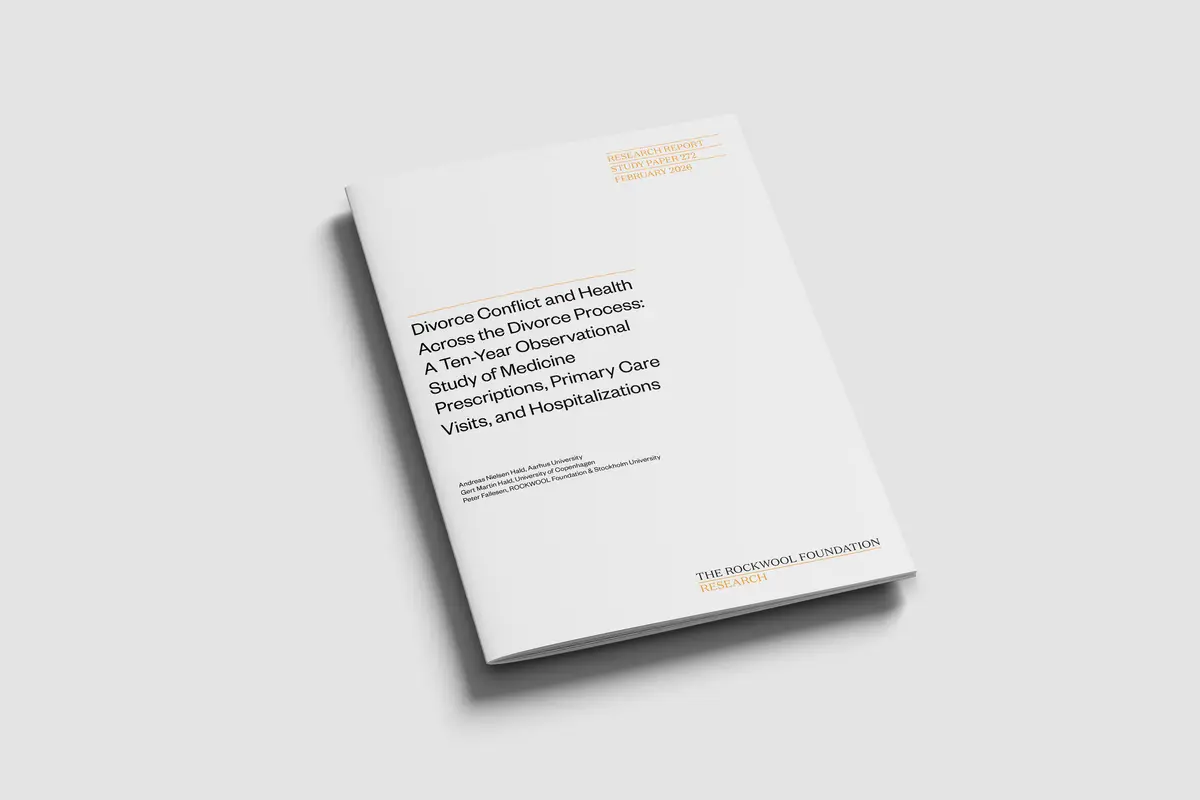
Using national health registers, this study tracked 1,784 Danish divorcees across ten years: five before their legal divorce and five after. Conflict was measured at the time of divorce using the validated Divorce Conflict Scale, and health outcomes came from registers — an objective source not subject to self-report bias.
Key findings
- A one-standard-deviation increase in divorce conflict corresponded to 28% more medicine prescriptions in the five years following divorce (IRR = 1.275; p = .001).
- The same increase corresponded to 5% more primary care visits (IRR = 1.045; p = .034) and 13% higher odds of hospitalisation (OR = 1.131; p = .035) post-divorce.
- The effect on prescriptions was primarily driven by psycholeptics (sedatives, sleep medications), not antidepressants.
- Critically, high-conflict divorces showed elevated healthcare use in the years before the legal divorce too — with a significantly steeper increase in primary care visits as the divorce approached.
- These associations were robust to controlling for pre-divorce health status, income and education.
What does this mean in the real world?
High-conflict divorce is not just painful — it is measurably, demonstrably harmful to health for years, and the damage begins long before the legal decree.
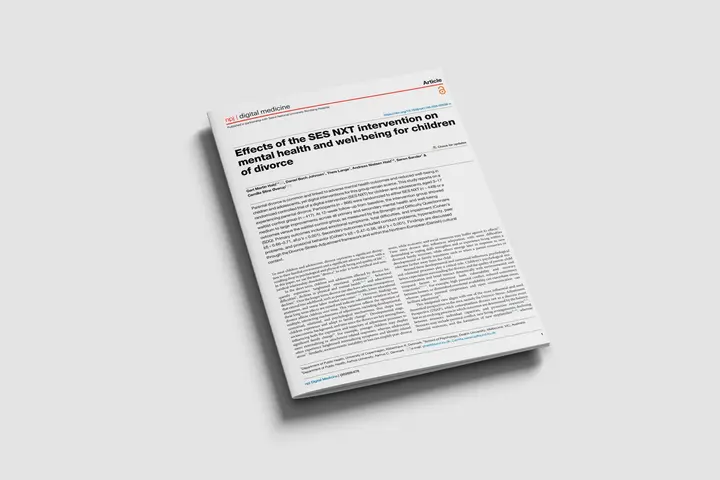
This makes a powerful case for early conflict reduction. Addressing conflict through programmes like SES ONE and SES NXT is not just a communication goal: it is a genuine public-health intervention with real consequences for how much medication people need, how often they see a doctor and whether they end up in hospital.
A.N. Hald, G.M. Hald & Fallesen (2026). ROCKWOOL Foundation Study Paper 272, February 2026. Authors: Andreas Nielsen Hald (Aarhus University), Gert Martin Hald (University of Copenhagen), Peter Fallesen (ROCKWOOL Foundation & Stockholm University). Externally peer-reviewed.