Researchers at the University of Copenhagen have begun analysing comprehensive data from nearly 1,000 children and adolescents who participated in the SES NXT study – a digital intervention for children and young people from separated and blended families. The research project is one of the largest of its kind internationally. 21 Danish municipalities participated in the project.
What is being studied?
The study examines mental and physical well-being, and whether there is a measurable relationship between using SES NXT and:
- Better mental well-being (less anxiety and depression)
- Fewer physical symptoms (headache, stomach ache, nausea)
- Higher quality of life (everyday quality of life)
- Fewer attention problems (worry and difficulties with concentration)
- Fewer behaviour problems (norm-breaking and boundary-crossing behaviour)
- Fewer emotional problems (emotional burden)
- Fewer sleep difficulties (sleep quality and sleep problems)
- Less school absence (absence and regular attendance)
- Reduced conflict level (parents’ conflict level)
How was the study conducted?
The data was collected between 2023 and 2024. The study is a Randomised Controlled Trial (RCT study). The participants – the nearly 1,000 children – were divided into two groups: an intervention group and a control group. The intervention group received access to SES NXT directly, while the control group received access after 12 weeks. This makes it possible to compare the two groups and isolate the effect of the intervention. Participants were evaluated three times: at enrolment, after 4 weeks and after 12 weeks.
Why does this matter?
The results will primarily show whether SES NXT works: whether there is evidence for the effect. And if so, where the effects are greatest and smallest. This will give important knowledge about how we can best help children and young people in separated and blended families.
When will we get the results?
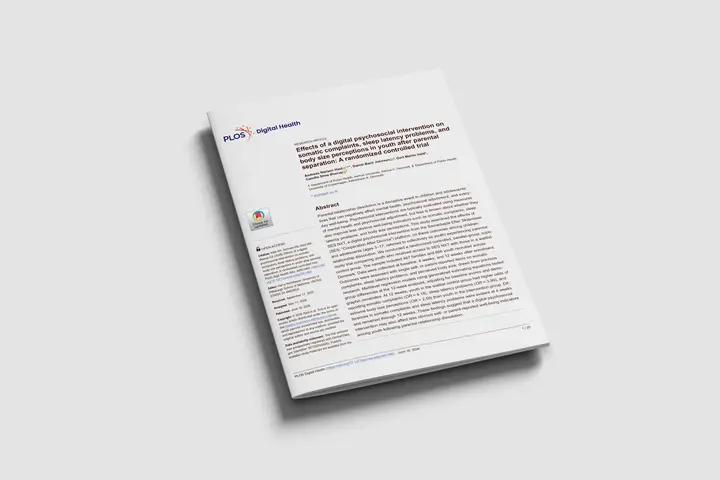
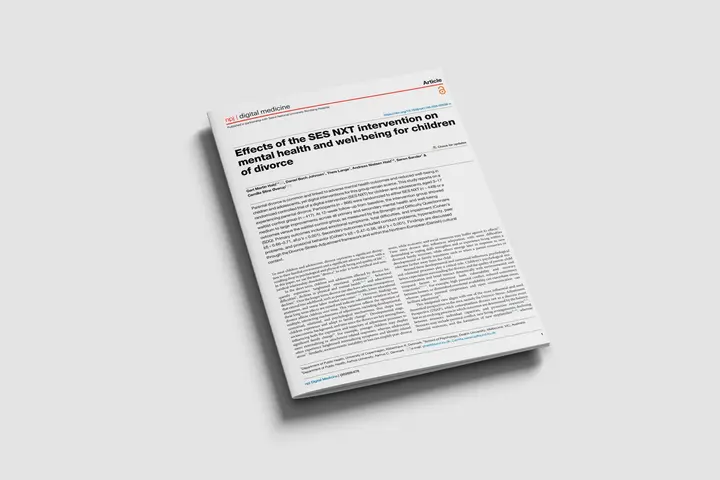
The first scientific article describing the research study has recently been published, and more publications are expected in 2025. The process ensures that results are reliable and can be used by professionals and decision-makers.